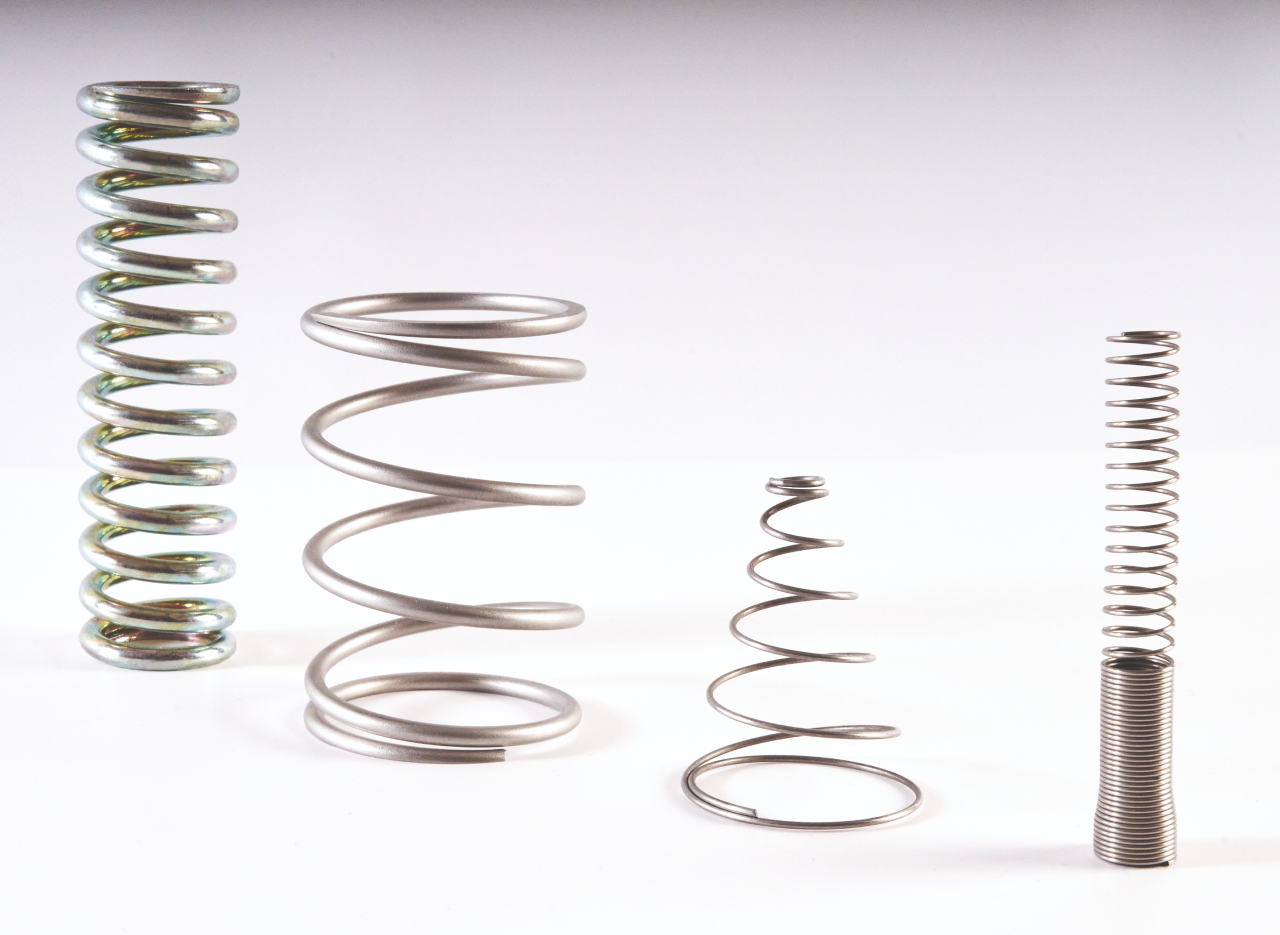
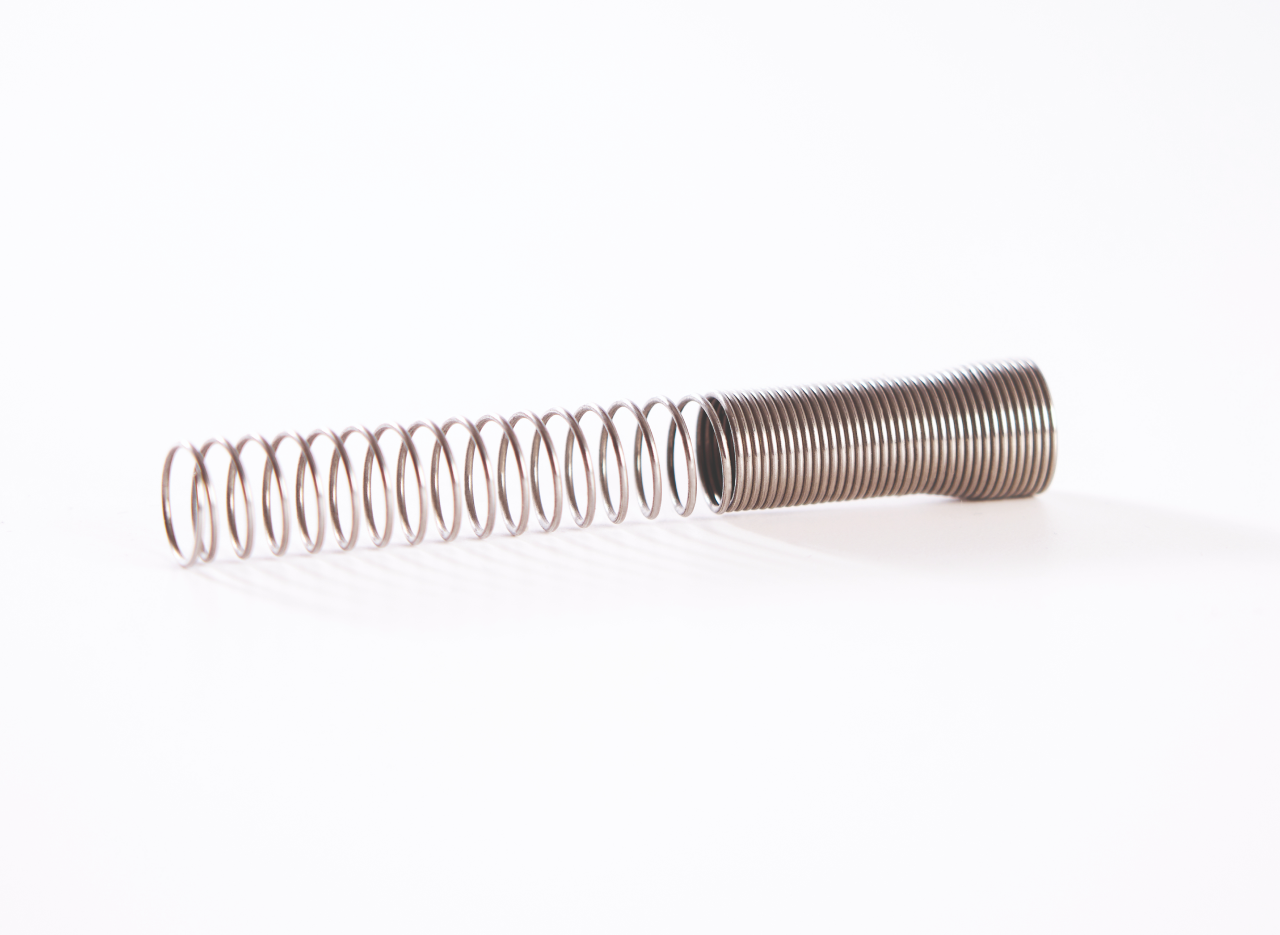
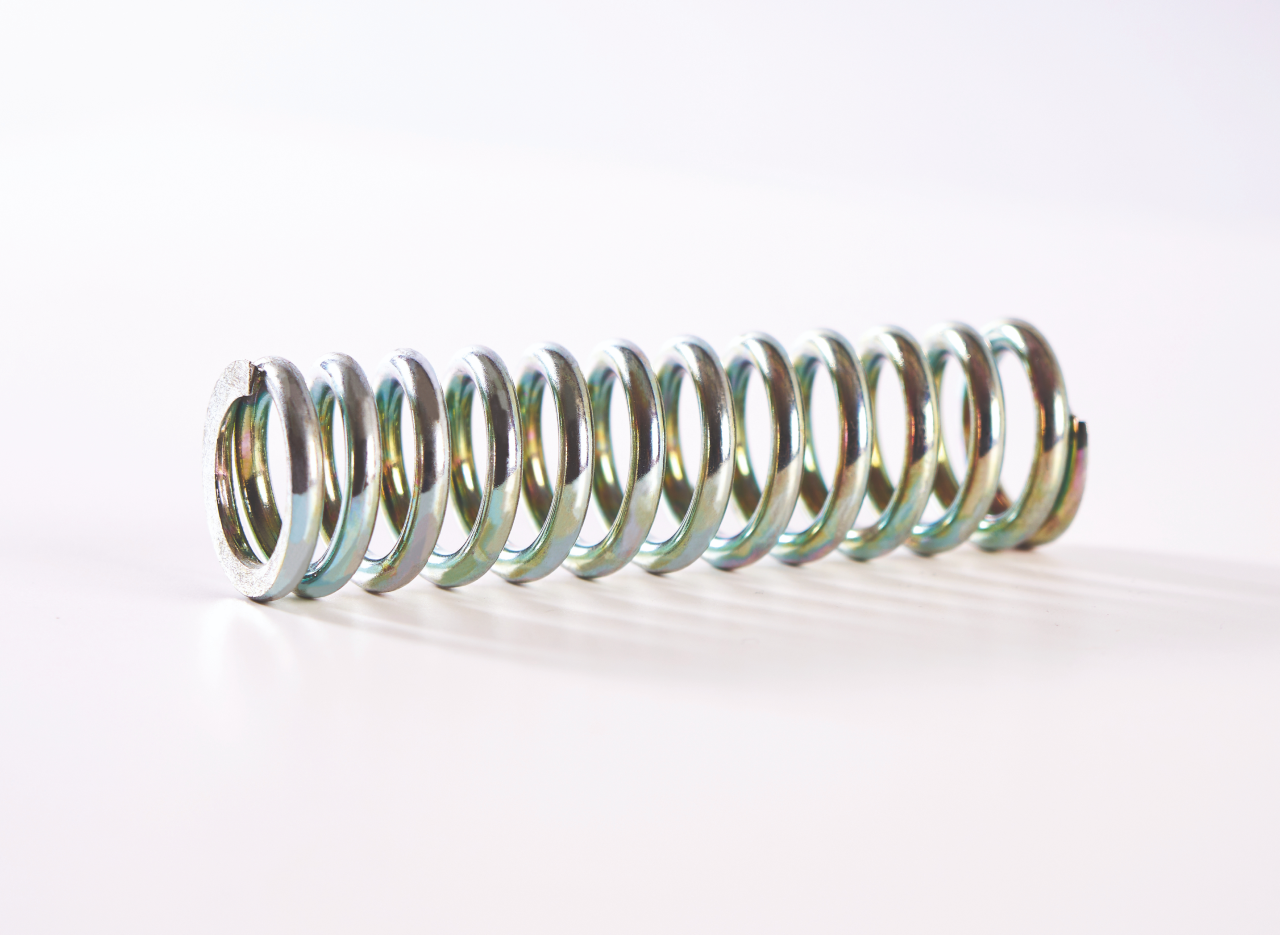
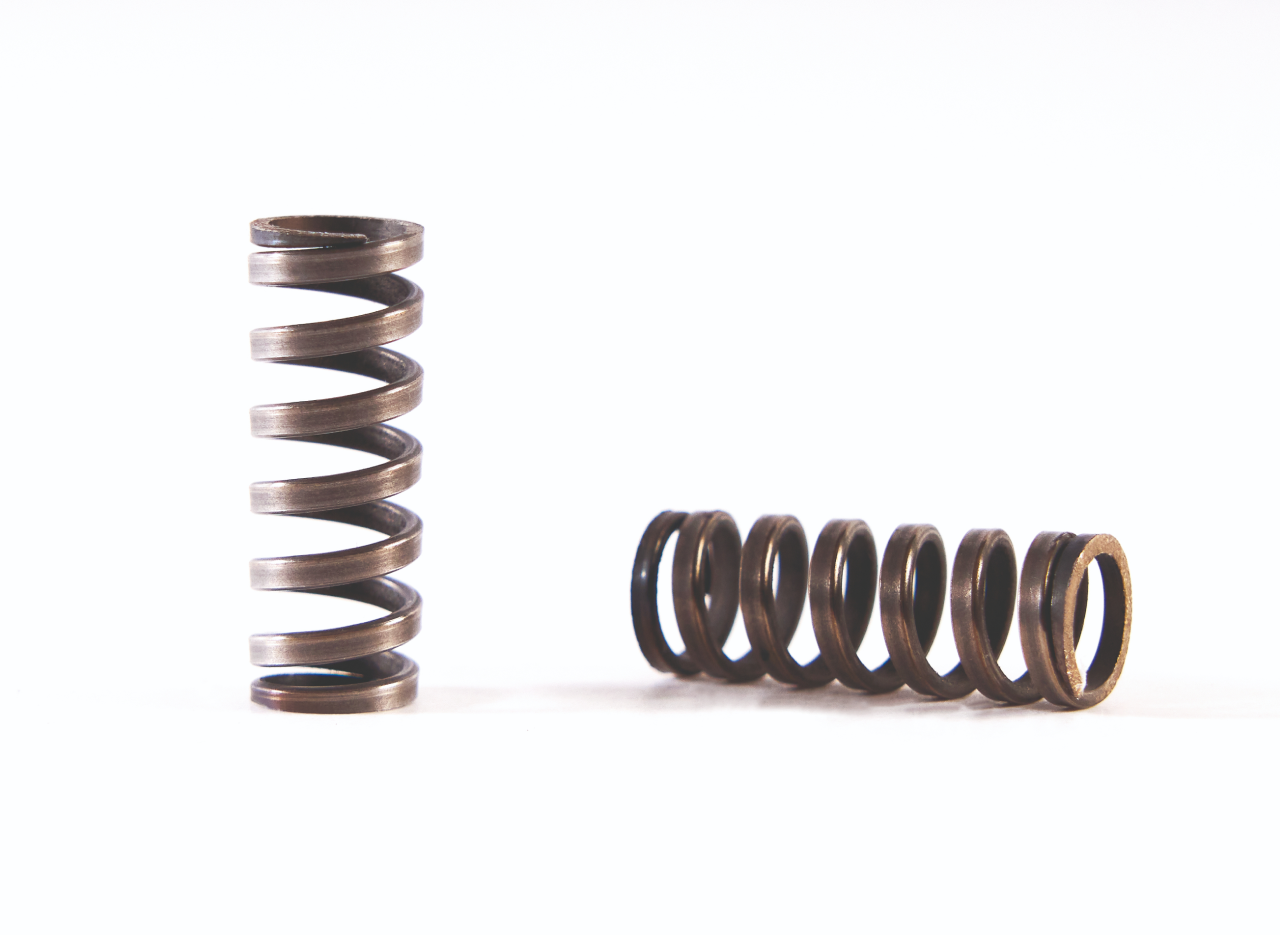
It is a helical spring designed to withstand compressive forces. Its main function is to store energy when compressed and release it as it expands, maintaining spacing between two components or absorbing impact.
It operates on the principle of elasticity. When an axial load is applied, the coils move closer together, storing mechanical energy. Once the load is removed, the spring attempts to return to its original (free) length.
It is based on Hooke’s Law. For accurate calculation, we need the wire diameter, the outer diameter, the initial length and the required spring rate expressed in N/mm.
It depends on the environment. Carbon steel (EN 10270-1) is ideal for general use due to its high strength, while stainless steel (AISI 302/316) is the preferred option for corrosion resistance. Superalloys are also available for highly demanding conditions.
The load varies depending on the design. We manufacture everything from micro springs capable of supporting just a few grams to industrial springs designed to handle several tonnes of pressure.
It depends on fatigue. A properly designed spring that does not operate at the limit of its elastic capacity and works in a controlled environment can last for millions of cycles.
Utilizamos cookies para mejorar tu experiencia de navegación, ofrecer anuncios o contenido personalizados y analizar nuestro tráfico. Al hacer clic en “Aceptar todo”, aceptas el uso de cookies.
Funcional
Always active
El almacenamiento o acceso técnico es estrictamente necesario para el propósito legítimo de permitir el uso de un servicio específico explícitamente solicitado por el abonado o usuario, o con el único propósito de llevar a cabo la transmisión de una comunicación a través de una red de comunicaciones electrónicas.
Preferencias
El almacenamiento o acceso técnico es necesario para la finalidad legítima de almacenar preferencias no solicitadas por el abonado o usuario.
Estadísticas
El almacenamiento o acceso técnico que es utilizado exclusivamente con fines estadísticos.El almacenamiento o acceso técnico que se utiliza exclusivamente con fines estadísticos anónimos. Sin un requerimiento, el cumplimiento voluntario por parte de tu proveedor de servicios de Internet, o los registros adicionales de un tercero, la información almacenada o recuperada sólo para este propósito no se puede utilizar para identificarte.
Marketing
El almacenamiento o acceso técnico es necesario para crear perfiles de usuario para enviar publicidad, o para rastrear al usuario en una web o en varias web con fines de marketing similares.